If you want the Best Landing Page Builders for 2026, focus on one thing first: match the builder to your goal. For fast direct response (sales now), you need quick page creation, clean mobile speed, testing, and a smooth checkout path. For lead generation (book calls, capture emails, build lists), you need strong forms, simple integrations, and an easy way to follow up. As of January 2026, seven builders keep showing up in serious marketing stacks: Unbounce, Instapage, Leadpages, ClickFunnels, HubSpot, Webflow, and Wix. Most brands end up choosing one “performance-first” tool for paid traffic, or one “brand-first” tool that also supports landing pages. Multiple recent roundups point to the same shortlist, and the vendors’ own feature pages back up why these platforms win in real-world use.
A landing page still has one job: it should feel like a calm, focused room with one clear exit. When you remove clutter, align the message to the ad or email that brought the visitor in, and make the next step obvious, conversions rise. The builder matters because it decides how fast you can ship, how easy you can test, and how confidently you can scale.
What “best” means for direct response vs lead generation
Direct response pages need a tight story. They usually include a crisp promise, proof, a clear offer, and a checkout or booking step that does not break the mood. You want a builder that lets you adjust headlines and sections quickly, duplicate variants, and learn from results without rebuilding everything. That is why some platforms lean hard into experimentation and routing visitors to the best-performing version of a page.
Lead generation pages feel different. They work best when they build trust in small, quiet ways. Think simple layouts, readable typography, and forms that feel effortless. You want strong native forms, easy CRM connections, and clean handoffs to email tools. That is why platforms with built-in CRM workflows often shine here.
Now let’s walk through the seven platforms that consistently earn the “Best Landing Page Builders” label for 2026, and where each one fits.
Read Also: Keyword Cannibalization in 2025 – How to Stop Your Pages Competing and Boost Rankings
Unbounce: best for fast tests and performance-focused campaigns
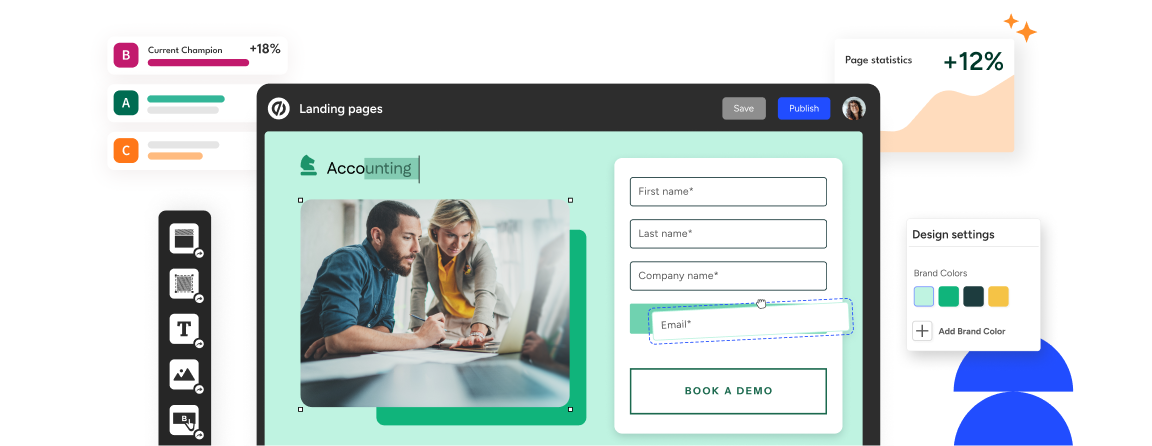
Unbounce fits teams that run paid traffic and care about conversion lift. It makes page building feel practical and quick. You can launch, test, and optimize in one place, which keeps momentum high when you run short promos or seasonal offers. Unbounce also emphasizes dynamic routing that learns which page variant converts better for different visitors, which matters when your traffic sources vary by intent.
If you run direct response campaigns, Unbounce works well for “message match.” You can build a page for each ad angle without multiplying your workload. When you treat each landing page like a tailored storefront window, visitors feel understood. That usually improves clicks and form starts.
Unbounce can also suit lead generation when you want clean forms and focused layouts, but it especially stands out when you plan to test often. Pricing and plan details change, but Unbounce publicly lists tiers and highlights unlimited conversions and broad integrations across plans, which helps when you scale.
Read Also: How to Enrich LLM Context to Significantly Enhance Capabilities
Instapage: best for teams scaling ads and keeping brand control tight
Instapage tends to win when ad spend grows and teams need structured workflow. It positions itself around building, optimizing, and personalizing landing pages, and it calls out heatmaps, analytics, and testing tools that help you diagnose why a page leaks.
This is where Instapage feels different. It cares about the connection between ads and pages. Features like mapping ads to landing pages and reusable blocks support large accounts where dozens of ads point to many pages. When you run direct response at scale, that mapping prevents the “wrong page for the ad” mistake that quietly drains budget.
Instapage can also suit lead generation, especially when you need collaboration and consistent design. If your team includes a marketer, a designer, and a client who wants approvals, the workflow focus becomes real value. Instapage also publishes landing page lessons aimed at 2026 performance goals, which signals ongoing investment in conversion best practices.
Leadpages: best for small teams who want reliable lead capture and simple selling
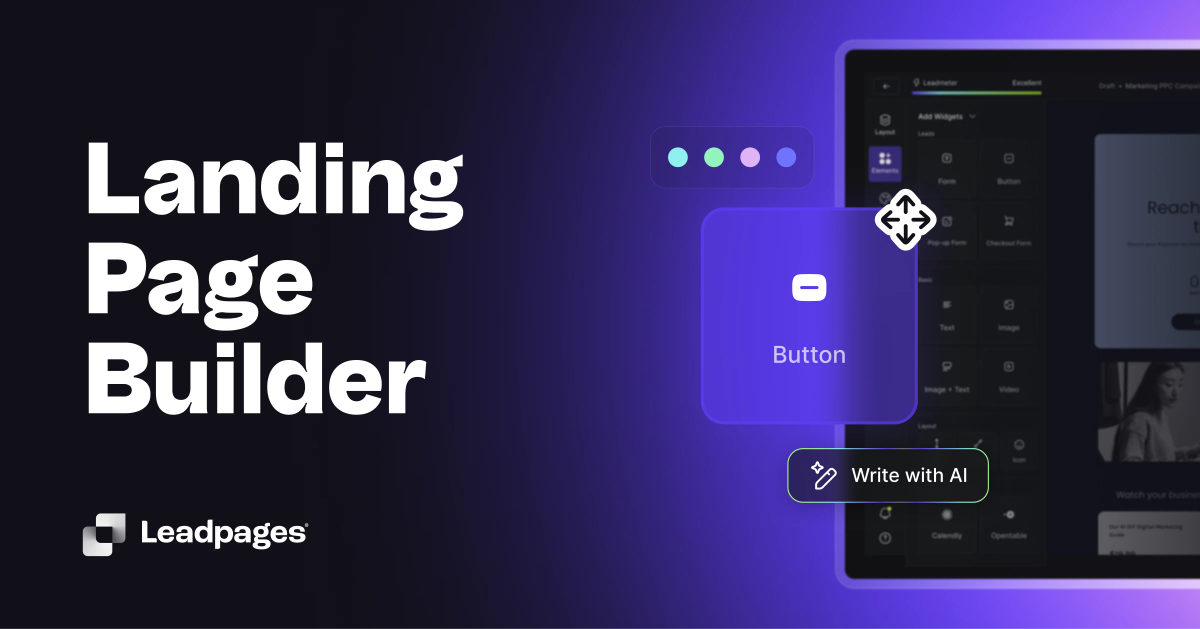
Leadpages has a long-standing reputation as a practical landing page builder for lead generation. It highlights quick building, drag-and-drop editing, and conversion-focused templates. That matters if you want something that “just works” without a heavy learning curve.
For lead gen, Leadpages makes it easy to put up a page for a webinar, a checklist, or a local service quote form. The template library and integrations matter here, because most lead gen pages live or die by how cleanly they pass data into your email platform or CRM. Leadpages explicitly positions itself around connecting to your marketing stack.
For direct response, Leadpages becomes more interesting when you want a light checkout path. It promotes checkout-style templates that allow on-page checkout forms, which can reduce friction for simple offers. Think low-ticket digital products, deposits, or quick add-ons.
Read Also: Google Search Console Adds Achievements Report: A New Way to Track Your SEO Milestones
ClickFunnels: best for direct response funnels that need more than one page
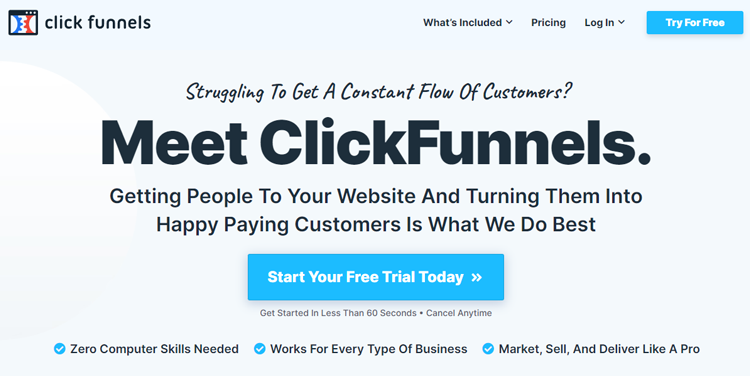
Some offers do not convert on one page alone. You might need an opt-in page, a sales page, an order form, and a thank-you page that guides the next step. That is where ClickFunnels shines. It positions itself as a funnel platform, not just a landing page editor. It also promotes an app focused on creating landing pages fast and includes it across plans, which helps if you want one system for the full flow.
ClickFunnels is a strong fit for direct response when you sell services, coaching, or digital products and you want a guided buying journey. You can build a clean path that keeps the visitor moving forward. When you design each step like a cozy hallway with good lighting, people do not feel lost. They keep walking.
It can still support lead generation, especially when you want automated follow-up and pipeline thinking. ClickFunnels also highlights messaging and appointment-related tools, which can matter if your “conversion” is a booked call rather than a checkout.
HubSpot Landing Pages: best for lead generation tied directly to CRM
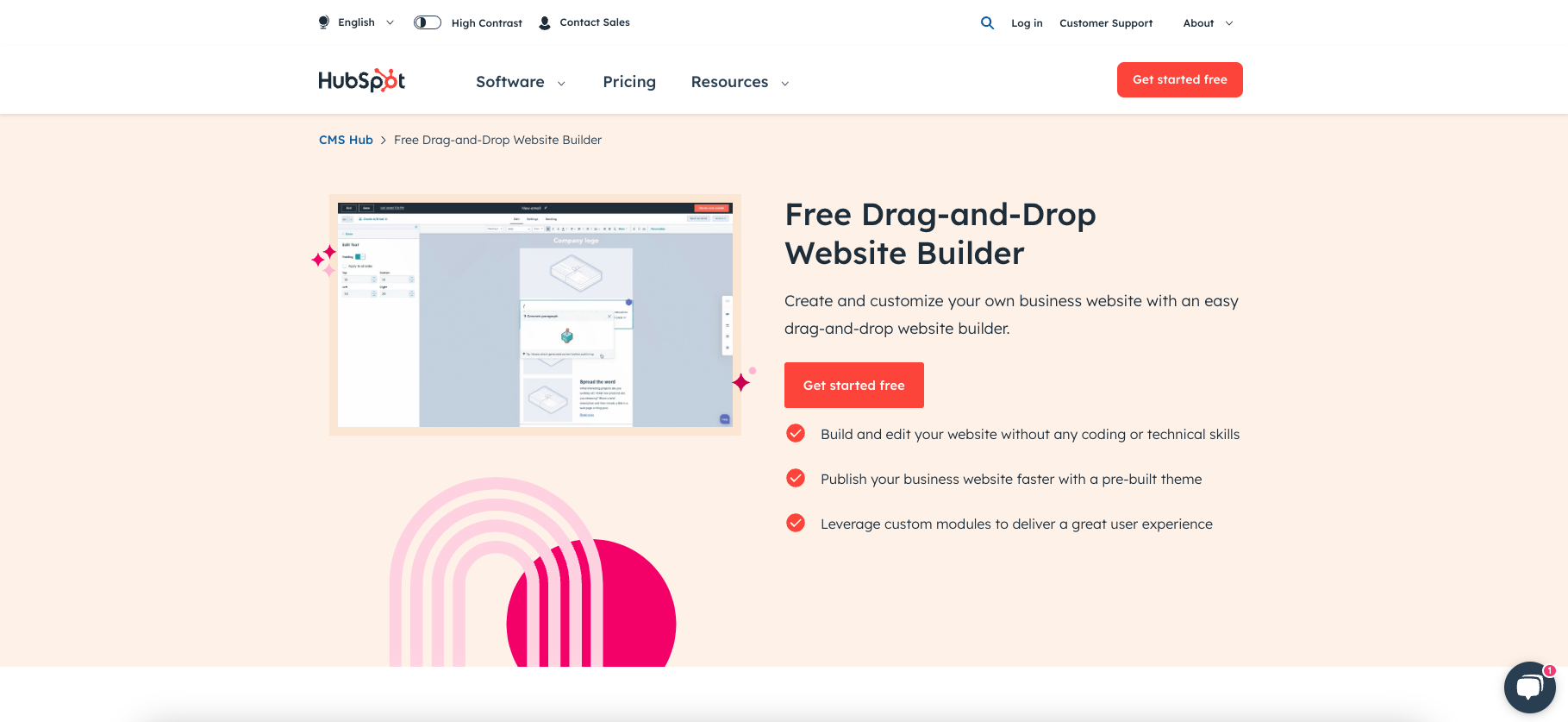
If you want lead generation with less friction after the form submit, HubSpot is hard to ignore. HubSpot promotes a free landing page builder designed to convert visitors into qualified leads and place those leads straight into its CRM ecosystem. That is the core value. You reduce the gap between “new lead” and “follow-up.”
HubSpot fits teams that care about lifecycle marketing. The landing page is not a standalone asset. It becomes the first chapter in a longer story that includes email, segmentation, and sales handoff. That alignment often increases the real metric that matters: lead quality.
For direct response, HubSpot can work when your “sale” happens through a sales team rather than a checkout button. If your business sells higher-ticket services, HubSpot’s strength is the clean path from page to pipeline.
Read Also: Extracting Structured Data with LangExtract: A Complete Guide to LLM-Orchestrated Workflows
Webflow: best for design-led brands that still need conversion structure
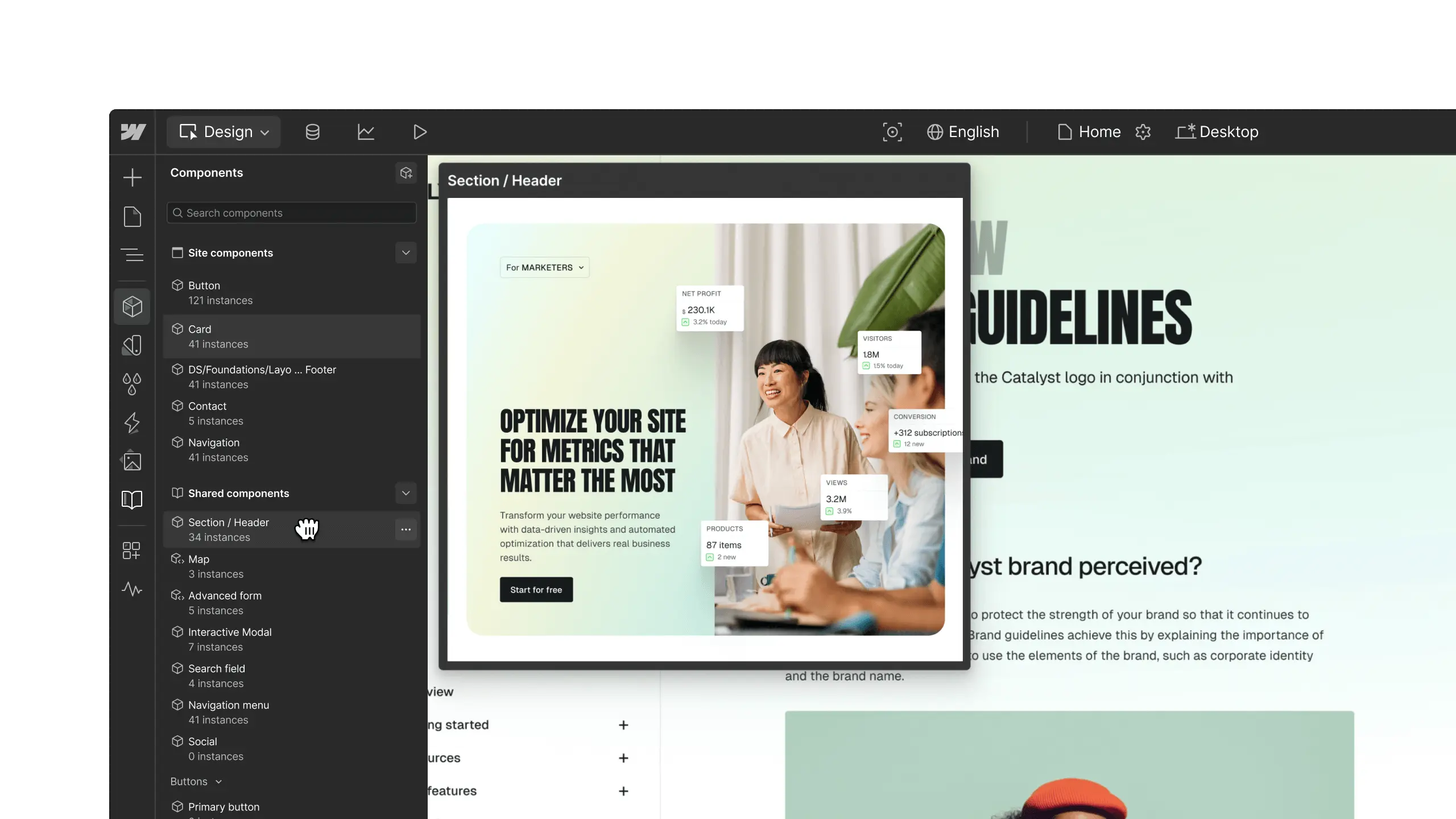
Webflow is not only a landing page tool. It is a full visual site builder with strong design control. That makes it a favorite for brands that care about aesthetics, spacing, and typography as much as conversions. It also offers landing page templates designed to drive conversions, including formats that focus on inquiries, bookings, and launch pages.
Webflow feels like an airy studio apartment. You can place everything with intention. When you want a cozy modern design with real brand personality, Webflow gives you that freedom. You can build pages that look custom without looking “template obvious.”
For lead generation, Webflow templates often include inquiry forms and clear calls to action, which supports service businesses and studios. For direct response, Webflow works best when you already have a clear conversion path and you want a premium feel. Many teams pair Webflow with dedicated testing tools when they want deeper experimentation than a typical site builder offers.
Wix: best for quick, stylish landing pages with built-in business tools

Wix sits in a sweet spot for many small businesses. It offers a large template set, drag-and-drop editing, and business add-ons like chat and forms that support lead capture. Wix also publishes dedicated landing page templates and a landing page builder positioned around generating traffic, leads, and sales.
If you want a page up today, Wix makes that easy. It also suits teams that want everything in one place, like a simple site, a landing page, and basic marketing features without stitching together many tools. Template descriptions call out features like chat and forms, which can help with lead generation in a very practical way.
For direct response, Wix can work for straightforward offers, especially when the purchase happens elsewhere or when the goal is a lead or booking. If you plan heavy paid testing, a more experimentation-driven platform may feel better. But for many brands, Wix hits the right balance of looks and speed.
How to choose among these Best Landing Page Builders
Most people pick the wrong tool because they shop for features instead of outcomes. Start with your primary conversion.
If you want direct response with frequent testing, look closely at Unbounce and Instapage. Their public feature messaging centers on optimization and testing, which matches how paid traffic teams operate. If you need a multi-step journey, ClickFunnels often feels simpler because it treats the funnel as the product.
If you want lead generation that feeds a CRM fast, HubSpot is the cleanest match because it frames landing pages as a front door into a CRM database. If you want easy lead capture without heavy setup, Leadpages stays a steady option with a template-first approach and wide integrations.
If design and brand matter most, Webflow gives the most control, while Wix gives the fastest path with a big template catalog.
What high-converting pages still share in 2026
Tools help, but pages convert because they feel clear. Keep one primary action. Keep the layout calm. Use generous spacing and readable type. Make the headline match the promise that brought the visitor in. Then support that promise with proof that feels human, like a short testimonial, a recognizable client logo, or a simple before-and-after story.
When you run lead generation, ask only for what you will use. Every extra field costs trust. When you run direct response, remove friction from the buying moment. If you ask a visitor to “wait and see,” you lose the sale. If you guide them step by step, you earn momentum.
Closing thoughts
The Best Landing Page Builders for 2026 are not “best” in a vacuum. They are best because they fit specific jobs. Unbounce and Instapage suit performance marketing and testing. Leadpages fits fast lead capture with simple selling. ClickFunnels fits full-funnel direct response. HubSpot fits CRM-first lead generation. Webflow fits brands that want custom design with conversion structure. Wix fits quick, stylish pages with practical business tools. Recent industry coverage highlights the same short list, and the vendors’ own feature pages explain why these platforms continue to lead.
If you tell me your offer type (service, product, course, local business) and your main traffic source (ads, email, social, search), I’ll recommend the best-fit option from this list and suggest a landing page layout that matches your intent.